

The situation is serious. Vessels, cargo, and most importantly, the lives of seafarers are exposed to real and evolving risks. For those onboard, this is not theory. It is reality.
From ashore, it is difficult to fully understand the pressure and uncertainty that crews operate under in such conditions. They carry responsibility not just for navigating a vessel, but for navigating a situation where the margin for error is extremely small.
And yet, they continue to operate with a level of professionalism and judgement built over years at sea, often under conditions that cannot be fully understood from ashore. In environments like these, there are no perfect controls.
Resources onboard are limited. Support is distant. Situations can change quickly.

What remains constant is preparedness. Not as a concept, but as something practiced repeatedly, realistically, and with intent.
Procedures and checklists have their place. They provide structure and consistency. But real situations rarely follow a script. The gap is not between having procedures and not having them. It is between planning and execution.
Preparedness is therefore not just about following what is written. It is about thinking ahead:
- What could go wrong in this transit?
- What have similar situations taught us, recently or in the past?
- Where are we most exposed, and how would we respond if things escalate?
These are not new questions. They are part of the training and experience that every seafarer carries. Moments like these are a reminder to rely on that foundation.

Drills That Reflect Reality
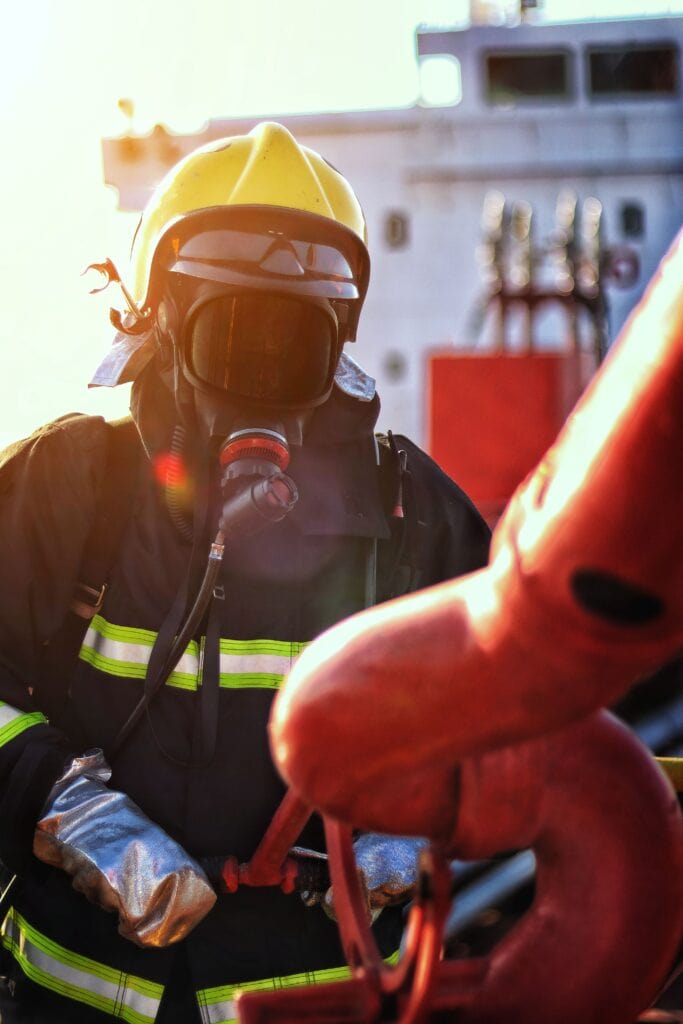
Drills and exercises play a quiet but critical role here. Not as routine activities, but as a way to stay connected to reality. The closer they are to real scenarios, the more valuable they become. Not because they guarantee outcomes, but because they reduce uncertainty. They help ensure that when something unexpected happens, response is not delayed by hesitation.
There is also something less visible, but equally important. Mindset.
In high-risk situations, clarity, calmness, and confidence matter as much as any system or procedure. Preparedness is not only about equipment or drills. It is about being mentally ready to act when it matters most.
Across the industry, there is increasing focus on making preparedness more consistent and more visible. Not just confirming that drills are completed, but understanding whether they are effective. Tools like ShipManager QHSE support this by structuring safety tasks, supporting drills, and making preparedness measurable over time. They do not replace experience on board. They help make it visible and consistent across the fleet.
From Onboard Activity to Fleet-Wide Learning
ShipManager QHSE Cloud also enables a broader shift from isolated onboard activity to fleet-wide learning. By capturing how drills are planned, executed, and reviewed, operators gain transparency and traceability across vessels. This creates a more consistent level of preparedness and strengthens process reliability.
High-risk transits do not test whether procedures are in place. They test the depth of training, the strength of mindset, and the ability to respond when conditions are far from ideal. For those at sea today, these are not abstract ideas. They are part of daily reality. For those of us ashore, it is worth remembering that the stability of our everyday lives depends, in part, on their ability to navigate through situations like these.
Quietly. Professionally. Reliably.
The question is not whether procedures exist. It is whether crews can rely on them when the situation is no longer theoretical. And this is where ShipManager QHSE can help companies prepare fleet-wide.
Written by our Product Manager and former captain Ashirvad Srivastava, who knows this reality firsthand from years at sea, not just from a product perspective.
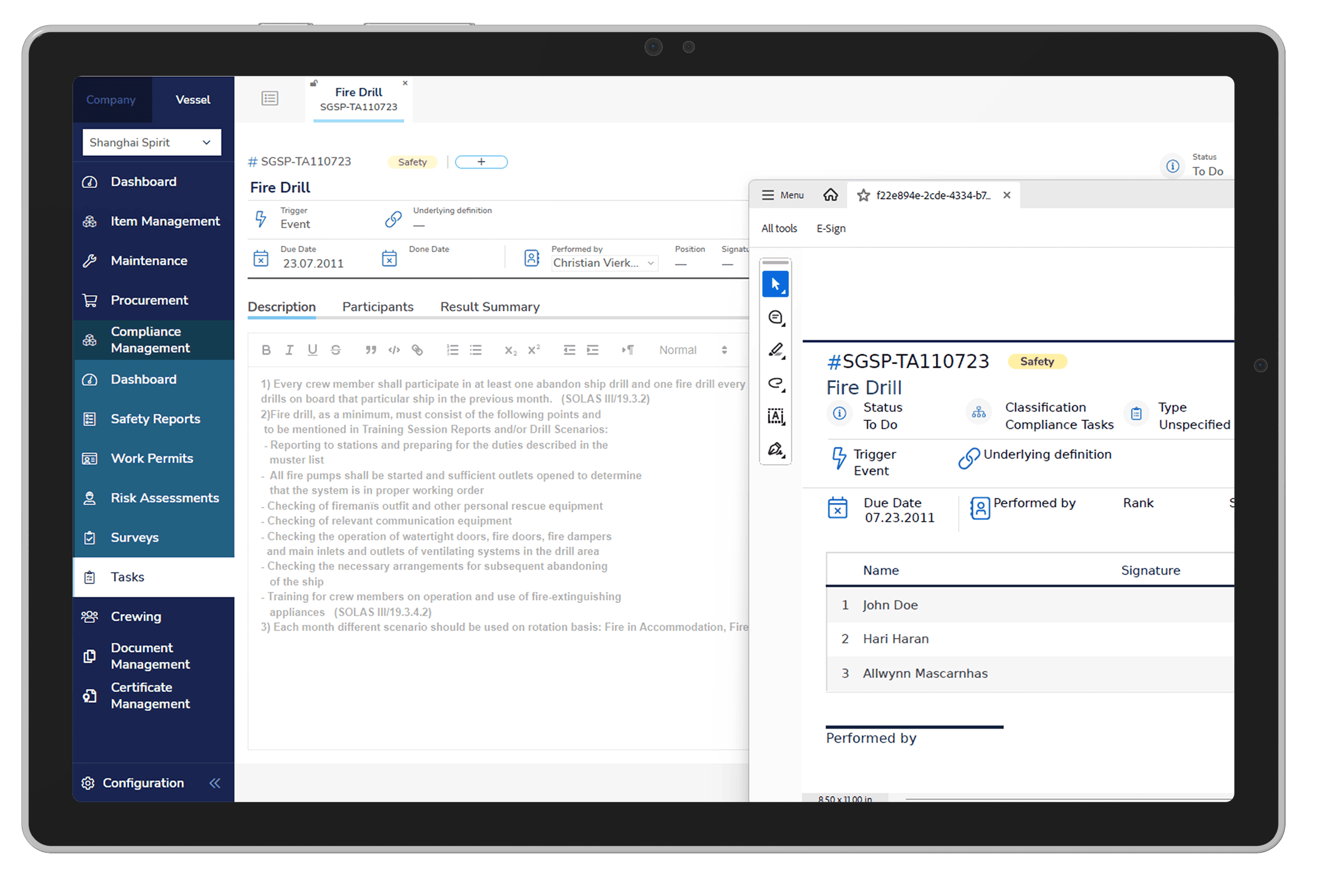
Plan, assign and verify safety-critical tasks
Define drills and routines with detailed instructions, recurrence patterns and assigned participants.
Each task captures who did what, when and why — complete with digital signatures and result summaries for full traceability.
Whether it is a fire drill or crew training, nothing gets lost, skipped or left undocumented.
Want to take a closer look at how preparedness can be made visible across your fleet?