


Moving port clearance onto a stronger foundation
Navigator Port · Classic to Cloud
From Classic to a cloud-ready platform
Navigator Port is moving from Classic to a cloud-ready platform – planned customer by customer, around the workflows each fleet depends on.
Port clearance is no longer just about forms.
When Navigator Port Classic was first built, port clearance was largely a vessel-side task: prepare the forms, submit them to the port, and receive clearance. Today it is part of a wider operational and compliance workflow.
Navigator Port Classic has supported port clearance for many customers over many years. The goal is not to replace what worked overnight, but to create the base for continuous development, better connectivity and future digital port clearance workflows.
Beyond the gangway
Port clearance information is increasingly needed by shore teams, compliance roles and reporting workflows.
Evolving regulatory processes
Authorities and port communities are moving towards structured digital processes and data-based submissions.
Connected workflows
Customers expect port clearance to work with crewing and certificate systems, with fleet-level visibility.
Built for a different operating reality
Navigator Port Classic has supported port clearance for many customers over many years. It has helped crews manage complex port requirements and keep daily operations moving.
But the environment around port clearance has changed. Customers now need a platform that can support stronger data structures, easier updates, better access control, and more realistic integration paths.
That is why we are moving Navigator Port onto a modern platform foundation. The goal is not to replace what worked overnight. The goal is to create the base for continuous development, better connectivity, and future digital port clearance workflows.
Structured data
SQL-based architecture for cleaner data handling, better data quality and stronger analytics.
Access and deployment
Role-based access control, browser-based use and remote deployment simplify administration.
Operational efficiency
Workflows for the new digital reality and centralised data management reduce manual effort.
Future connectivity
API capabilities for future integrations with port authorities, customer systems and digital port clearance ecosystems.
How Port Clearance is evolving
Across all three of these shifts, the direction is the same: port clearance is evolving from a fragmented paper trail into a streamlined digital compliance process. It is laying the groundwork for broader operational connectivity. We see this shift in customer expectations, in emerging digital port processes, and in collaborations like the Digital Corridor Project of the MPA Singapore and Port of Rotterdam. Port clearance will increasingly depend on reliable data flows between vessels, shore teams, authorities, and the platforms connecting them.
It sits at the heart of where ship-shore operational connectivity is heading.
Your route depends on the workflows you use
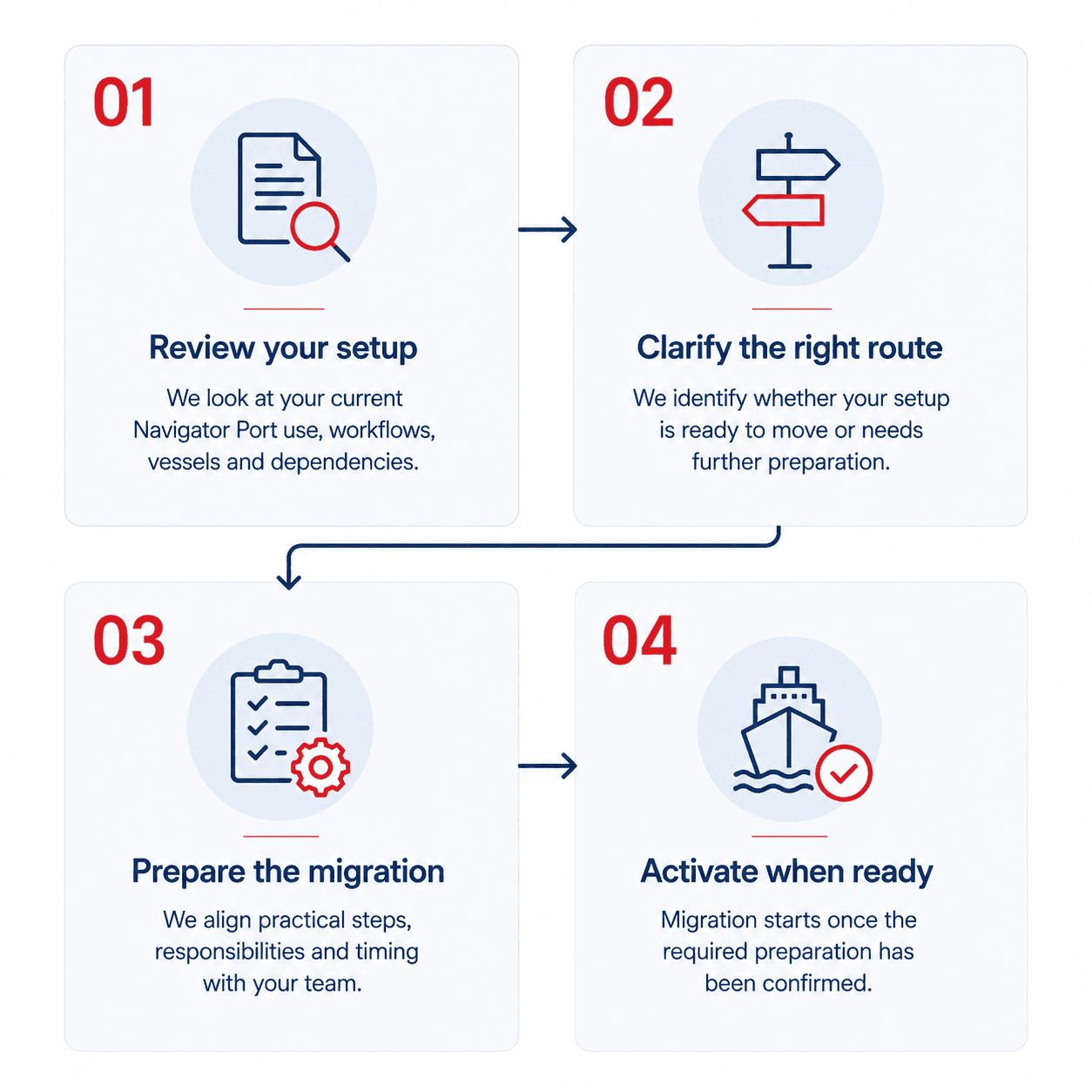
Before any upgrade path is confirmed, CFARER reviews your current setup and clarifies the best next step. Navigator Port Classic remains your operational baseline until your Cloud setup is confirmed.
Route 1: Ready to move now
For customers using core port clearance workflows with no major dependencies.
Route 2: Prepare interfaces and workflows
For customers who need technical checks, IT preparation or clarification of integrations before migration.
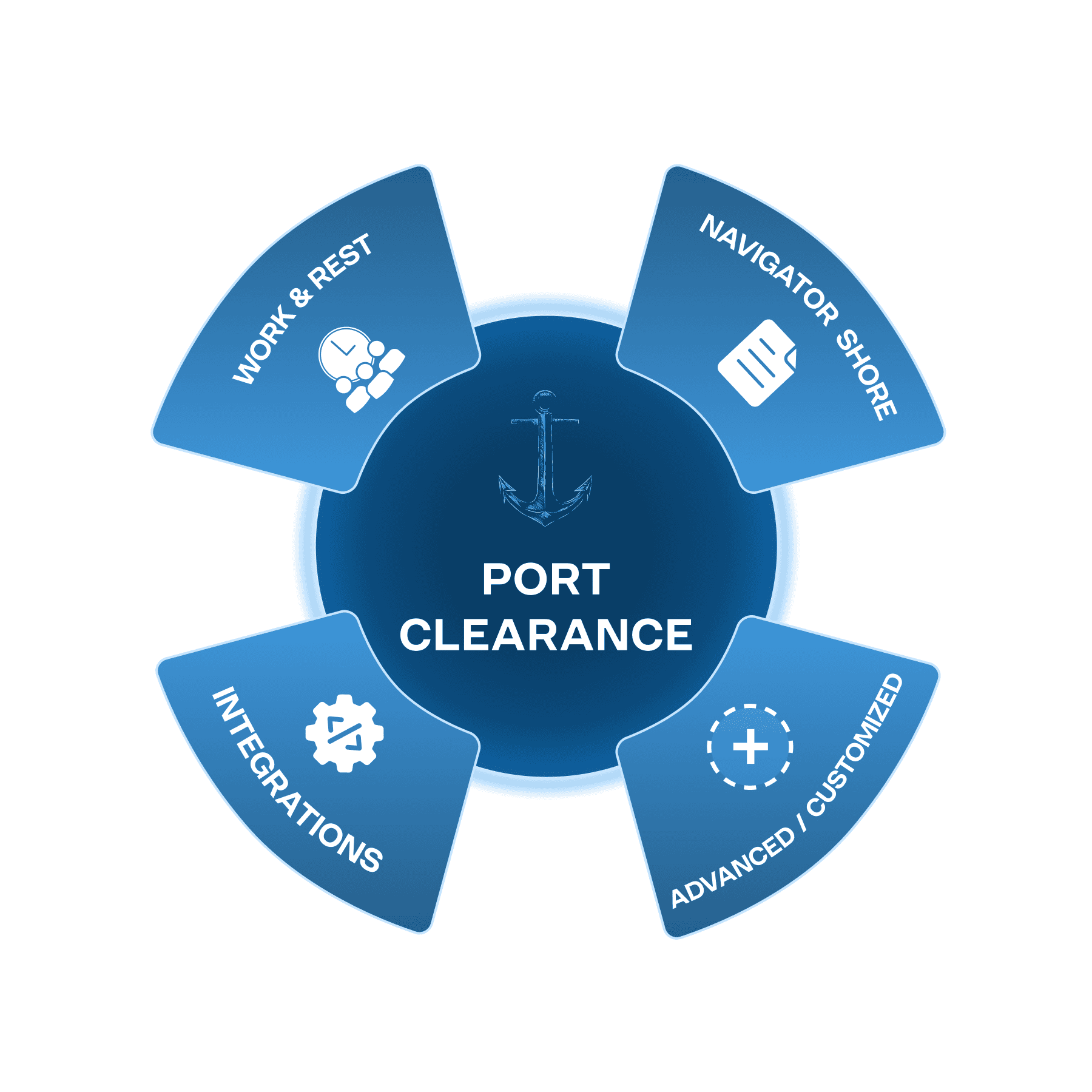
Route 3: Planned specialist migration
For customers using Work & Rest, Shore App or other specialist workflows, following a dedicated plan.
Our four upgrade principles
(1) Workflow readiness first
Customers move based on the workflows they use and whether those are ready.
(2) Clear preparation before activation
A clear view of setup, vessel scope, IT requirements and dependencies.
(3) No one-size-fits-all rollout
Routes differ by operational setup and migration risk.
(4) Guided by CFARER
Customer Success, Key Account Management and the upgrade programme owner work with your team.
Help us plan your route
Before confirming an upgrade path, we want to understand how you use Navigator Port today and which workflows, systems, or operational constraints matter most to your team.
This helps us prepare the right route, avoid unnecessary disruption, and ensure the upgrade is based on your actual onboard and shore-side needs.
Key information for your upgrade planning
Your current Navigator Port use
Which workflows and modules are used across your vessels today?
Dependencies and integrations
Which integrations or specialist workflows should be considered?
Vessel and IT setup
Who from your IT team should be involved, and are there vessel-specific requirements?
Preferred timing
Are there operational windows or fleet schedules that should guide timing?
Meet Anne & her dedicated team
A route covered by experts
I’m Anne Geelhoed, Product Director Digital Port Clearance at CFARER. Together with my international team, I lead the Navigator Port Classic to Cloud upgrade program.
Our role is to make sure your transition is handled with structure, care, and a clear understanding of your daily port clearance operation. We know Navigator Port users do not all work the same way. Every fleet has its own setup. So, we do not treat migration as a one-size-fits-all switch. Before defining your upgrade route, we look at your workflows. Navigator Port Classic remains your operational baseline until your Cloud setup is confirmed.
If you have questions about your upgrade path, timeline, or next steps, you can contact the team and me directly.


A controlled route forward
Customers will move when their setup is ready
The move to the modern Navigator Port platform will not happen in one single step for all customers.
Each upgrade path will depend on the customer’s current setup, operational workflows, vessel environment, and readiness to move. Before upgrading starts, CFARER will review the relevant dependencies and clarify the practical next steps with each customer individually.
The aim is simple: maintain reliable port clearance while moving customers towards a stronger platform foundation at the right pace.
Support throughout the upgrade
CFARER guides the process with a clear view of your setup
Before any upgrade or data migration begins, our experts will contact you and review your current Navigator Port setup, relevant workflows, vessel environment, and known dependencies.
This helps us understand which upgrade path fits your operation and what needs to be prepared before activation. Our aim is to make the transition controlled, transparent, and practical for your teams, both on board and ashore.
A route covered by experts
Talk to the upgrade team
The Classic to Cloud programme is led by Linde van Wulfften Palthe and her international team. Questions about your upgrade path, timeline or next steps? Contact us directly.
FAQ
Want to know more?
Get quick answers to the most common questions about the upgrade from Navigator Port Classic to the new cloud-ready platform.
What is changing and why is this happening now?
Navigator Port has served seafarers reliably for many years, but the environment around port clearance is changing. Ship and shore now need stronger data structures, better access control, clearer integration paths and a platform that can grow with new digital requirements.
Navigator Port’s next generation is built on a modern SQL-based architecture, deployed within your own environment, and designed to support the connected workflows that port clearance increasingly depends on. We are moving customers onto that stronger foundation – carefully, and at the right pace.
When will my vessels be upgraded?
The upgrade will not happen in one single step across all customers. The timing depends on which workflows and modules your vessels use, your technical setup, and operational readiness.
Before any upgrade is planned for your account, CFARER will reach out to review your current setup and clarify the best route forward. Your vessels will not be upgraded without preparation and direct contact from our team first.
Will there be any disruption to operations during the upgrade?
Our aim is to make the transition controlled and practical for your teams on board and ashore. Before the upgrade starts, we will review your vessel environment, relevant workflows and known dependencies to ensure the switch happens at the right moment.
Vessels using core port clearance workflows can typically be upgraded with minimal disruption. For customers with more complex setups – such as Work & Rest or specialist integrations – we will agree a dedicated plan before any upgrade takes place.
What happens to our Classic data after the upgrade - and can it be transferred to Navigator Port Cloud?
After your upgrade is activated, the previous version of Navigator Port will remain available for 45 days. This gives your team time to retrieve historical records and bring across the data you need, at your own pace.
Data migration arrangements vary by setup. We confirm the specifics with you during upgrade preparation, so your team knows exactly what to expect before the switch.
What does the upgrade require from our side?
The upgrade requires a fresh installation on your side, which means involvement from your IT team is essential. Before the upgrade begins, CFARER will review your current setup and provide clear guidance on what needs to be prepared and installed within your vessel and shore environment.
This typically involves:
- Technical compatibility verification by vessel IT teams
- Installation and implementation process
Beyond the technical installation, we ask that the right people are available for an initial setup review – and that you share any operational constraints or timing preferences that should guide your upgrade plan.
For customers with integrations, specialist workflows or specific vessel IT environments, some additional preparation may be needed. We will identify and communicate this clearly well before the upgrade takes place.
Will pricing change as part of the upgrade?
The upgrade itself does not trigger a price increase. That said, we are reviewing module and subscription pricing as part of this program. If current pricing no longer reflects the scope of use, your Key Account Manager will reach out to you individually before any changes take effect.
What are the main improvements in Navigator Port?
Structured data — SQL-based architecture supports cleaner data handling, improved data quality and stronger reporting capabilities.
Access and deployment — Role-based access control, browser-based use within your environment, and support for remote deployment simplify administration for both vessel and shore teams.
Shore connectivity — Port clearance data is accessible to shore teams, compliance roles and reporting workflows – not just the vessel.
Integration foundations — API capabilities provide a stronger base for future connections with port authorities, customer systems and evolving digital port clearance ecosystems.
Continuous development — A modern platform foundation means new features and compliance updates can be delivered faster and more reliably than was possible on Classic.
Faster Weekly Updates – Weekly updates can be released immediately when ready, instead of waiting for batch releases every few weeks
Does Navigator Port still work offline on the new platform?
Yes, the system will continue to work offline. That’s one of the reasons why we call it “cloud-ready”. It will combine the best of both worlds.
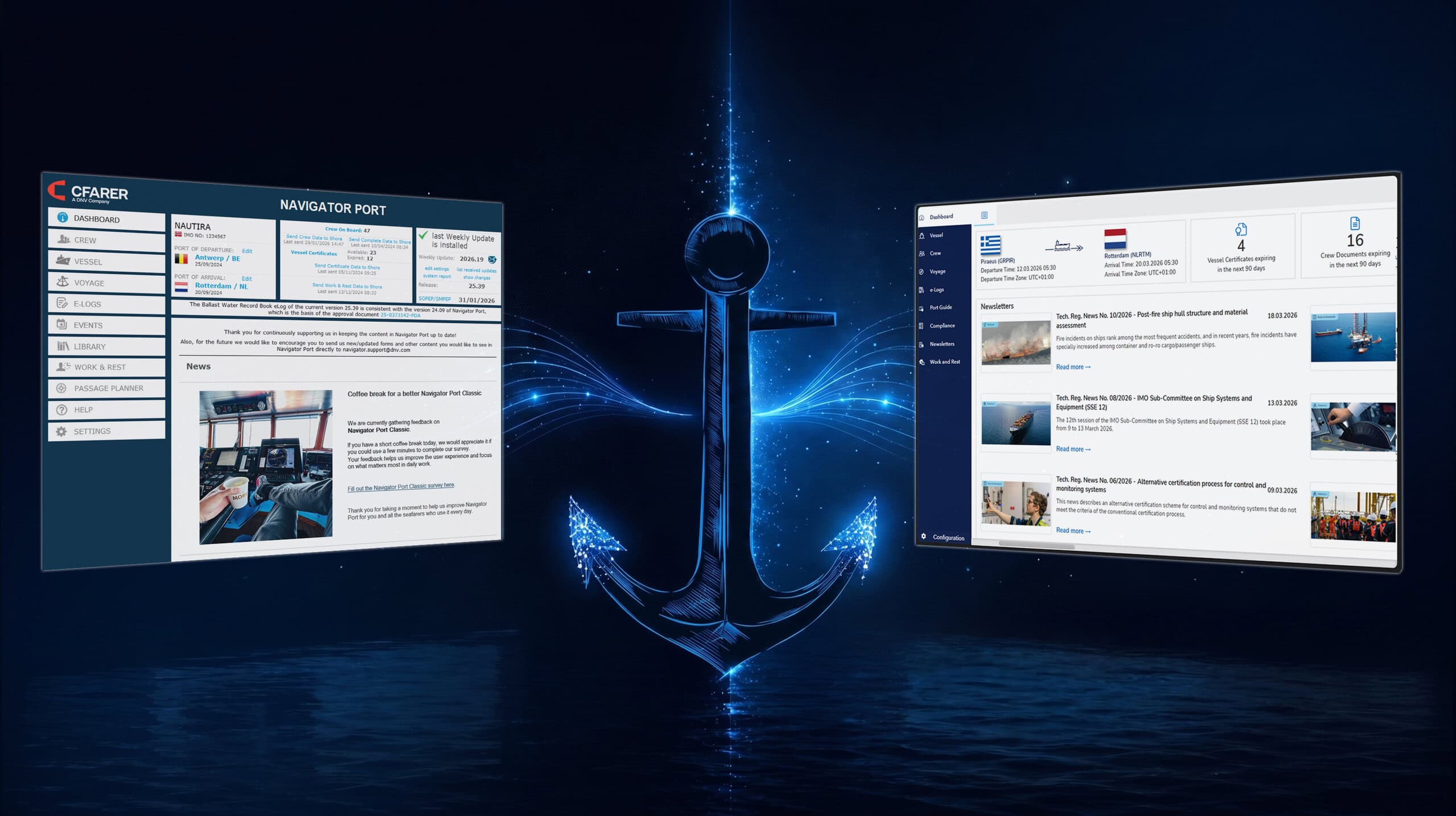
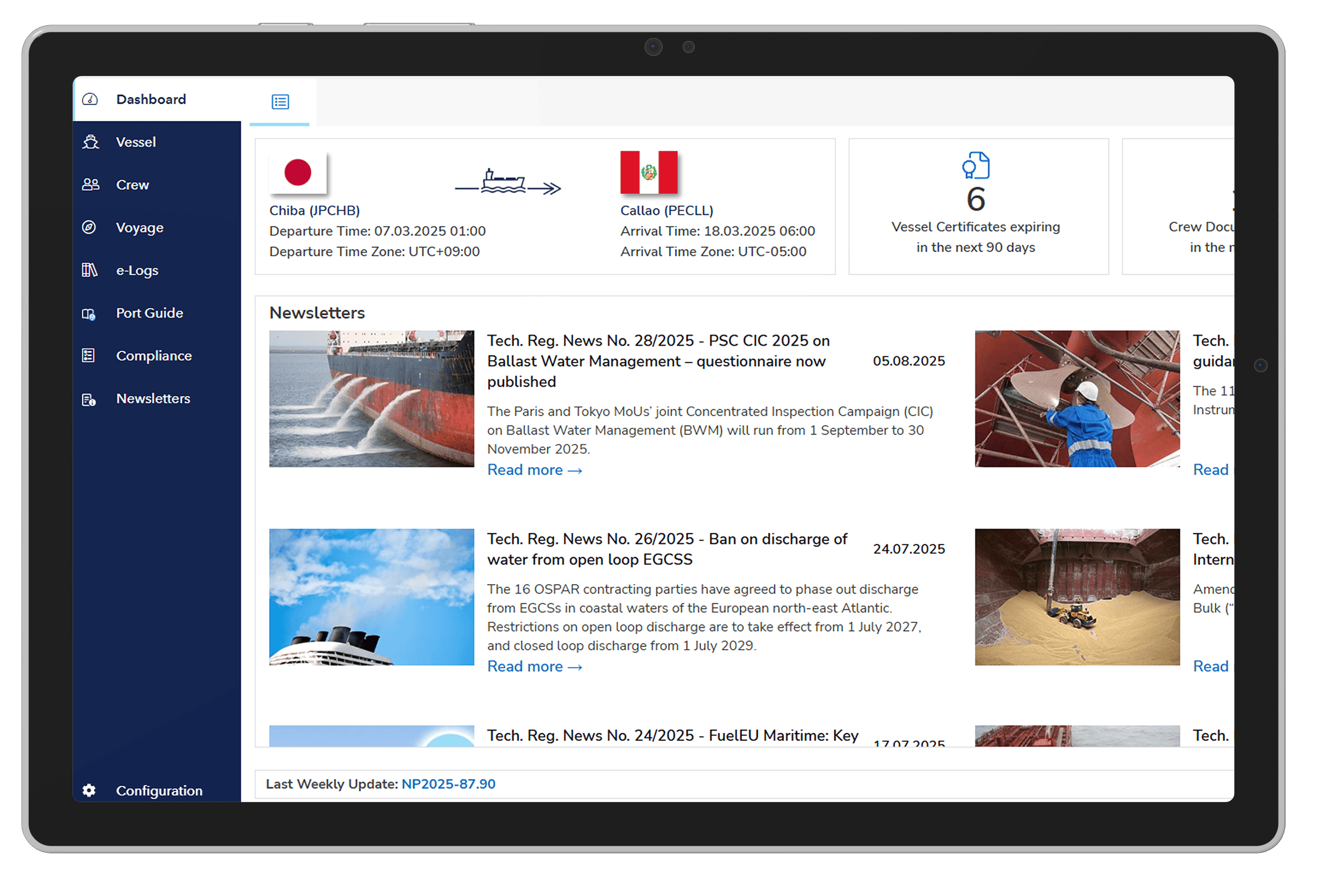
A first look at the new platform
See how Navigator Port is moving forward
Interested?